

Tactical Analysis
When a team fails to win any of its first 10 league matches, explanations often default to bad luck or individual quality. For Liverpool W, the data suggests something more structural. Eight defeats, two draws, and a goal difference of -13 points to systemic issues rather than variance.
Liverpool’s problems are most evident in game state management. Second-half output drops sharply, with defensive actions becoming increasingly reactive rather than anticipatory. Pressing intensity declines, distances between units expand, and opponents consistently generate higher-quality chances after the interval.
In possession, there is little evidence of a defined attacking framework. Ball progression is slow, chance creation is heavily reliant on isolated moments rather than repeatable patterns, and central zones are frequently bypassed. The result is a side that struggles to sustain pressure or control territory.
The numbers outline a team without a clear tactical identity, both in and out of possession, an absence that has translated directly into results.
Before goals, possession, or chance quality, the most revealing data point is structural instability. Across 11 league matches, Liverpool W have alternated between a 4-1-4-1, 5-4-1, and 4-2-3-1.
On paper, this suggests flexibility. In practice, it indicates uncertainty. Each system implies a different game model: the 5-4-1 prioritises deep defensive protection, the 4-2-3-1 seeks balance through a double pivot and central creator, and the 4-1-4-1 demands coordinated high pressing and advanced midfield occupation.
The issue is not the choice of any single formation, but the absence of continuity. Tactical automatisms, pressing triggers, build-up rotations, and spacing between units require repetition. Frequent structural changes disrupt relationship-building and force players into constant role redefinition.
The data points to reactive decision-making rather than a defined philosophy. Liverpool is adjusting shape to opponents without establishing a stable baseline, resulting in a side that looks different each week but improves in none.
Key Stats Supporting the Approach
The on-pitch consequences of this structural instability are clear in the output. Liverpool has scored eight goals in 11 league matches, an average of 0.6 per game, and has failed to score in 40% of fixtures. In WSL terms, that level of attacking return is unsustainable.
The timing of those goals is equally revealing. All eight have been scored before the 60th minute, with 66% arriving inside the opening 30 minutes. This points to sporadic early intensity rather than sustained attacking control. Once the initial phase of the match passes, chance creation drops sharply, suggesting limited adaptability and an inability to alter attacking patterns in-game.
Defensively, the figures are more severe. Liverpool has conceded 21 goals and kept zero clean sheets. While goals against are spread across matches, 26.32% have been conceded after the 75th minute, highlighting recurring late-game vulnerability.
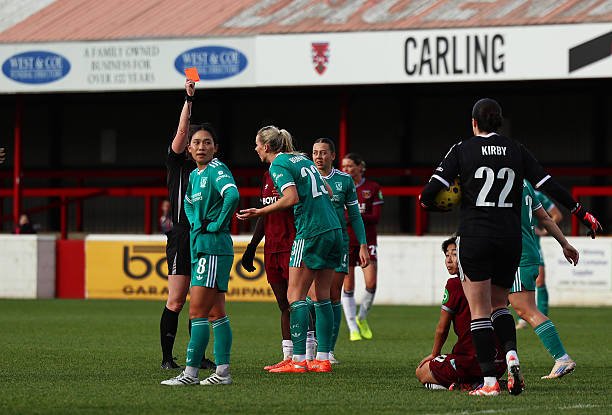
Disciplinary data reinforces this trend. Forty percent of Liverpool’s yellow cards are collected between the 61st and 75th minute, coinciding with declining physical output and positional structure. As intensity drops, defensive actions become reactive, leading to late challenges and loss of control.
Across attacking output, defensive resilience, and discipline, the data outlines a consistent pattern: early competitiveness followed by structural and physical collapse as matches progress.
Challenges and Adaptations
Liverpool’s challenges are structural and temporal. First, a lack of a settled tactical identity prevents the development of automated positional rotations and partnerships. Formational variation alternating between a pivot, flat four, or supporting a lone holder disrupts midfield cohesion and reduces understanding of passing lanes and movement triggers. Opponents do not need advanced analysis; maintaining a solid block is sufficient to neutralise Liverpool’s attacking patterns.
Second, the team exhibits a pronounced late-game decline. Data shows a spike in goals conceded and yellow cards after the 60th minute, indicating both physical fatigue and lapses in concentration. This creates a predictable vulnerability: once matches enter the final 20 minutes, defensive shape deteriorates, spaces emerge between units, and errors increase. Opponents can exploit this by absorbing early pressure and systematically increasing tempo in the latter stages, knowing that Liverpool’s structure is unlikely to hold.
The combination of inconsistent tactical structure and recurring second-half collapses constitutes the primary limitation on Liverpool’s WSL performance.
Liverpool’s lack of a coherent tactical identity is reflected directly in results. The team operates passively, reacting rather than dictating play, and fails to impose a consistent game model.
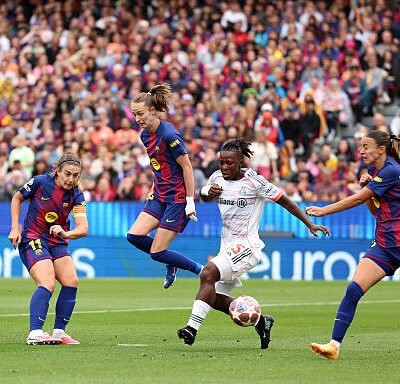
Across the top WSL teams, performance trends show that success is increasingly tied to a clear, proactive playing philosophy. Clubs such as Chelsea and Barcelona demonstrate structured positional systems, defined rotations, and repeatable attacking and defensive patterns. Liverpool’s inability to replicate these standards has led to measurable deficiencies: low chance creation, high goals conceded in late-game periods, and minimal possession control.
The data indicate that without a clearly defined, consistently drilled tactical approach, Liverpool is unable to compete with the league’s evolving technical and tactical benchmarks, leaving it behind both in points and developmental trajectory.
Liverpool’s issues are systemic. The attacking output is limited and heavily front-loaded, with goal-scoring largely confined to the first 60 minutes. Defensively, the team concedes disproportionately in the final 20 minutes, highlighting lapses in structure, concentration, and physical output.
Frequent formation changes 4-1-4-1, 5-4-1, 4-2-3-1 prevent the development of positional cohesion and automated patterns, undermining both build-up play and defensive stability. Without a consistent tactical framework and improved late-game management, the probability of positive results remains low.
Data suggests that stabilizing a single system, reinforcing it in training, and addressing conditioning deficits are prerequisites for reducing predictability and structural fragility. Until these measures are implemented, performance outcomes are likely to remain at the lower end of WSL benchmarks.
Have your say. Let me know what you think is the key to turning their season around in the comments below!