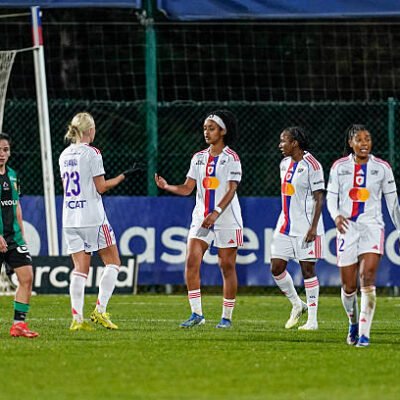

Arsenal Dismantle Chelsea at the Emirates: A Tactical Masterclass Sends a Statement to Europe
This was not merely a north-south London derby settled by fine margins — this was a systematic dismantling. Arsenal did not just beat Chelsea at the Emirates; they outthought them, outpressed them, and outran them in every phase of the game. A 3-1 scoreline in the UEFA Women’s Champions League sends a thunderous message: Arsenal are not just contenders, they are a team built to go deep in this competition.
Arsenal WFC
Goal 22′ · Goal 32′ · Goal 76′
Full Time
Chelsea FC Women
Goal 66′
1. The Setup
Arsenal lined up in their characteristic 4-3-3, a shape that under Jonas Eidevall has become one of the most cohesive and tactically layered systems in the Women’s Champions League. In possession, the fullbacks pushed aggressively high and wide, effectively converting the shape into a 2-3-5 attacking structure, with the two central midfielders providing the connective tissue between defence and attack. The striker held the line, stretching Chelsea’s backline, while the two wide forwards — operating as genuine inverted threats — created overloads in the half-spaces. Out of possession, Arsenal snapped into a compact 4-4-2 mid-block with aggressive press triggers designed to force Chelsea’s centre-backs into rushed decisions.
Chelsea arrived at the Emirates deploying a 4-2-3-1, a shape that has served them well domestically but one that carries inherent vulnerability against teams who press with intensity and directness. Their double pivot was tasked with protecting the backline and recycling possession, while the attacking midfielder was expected to link play between midfield and their lone striker. The wide forwards were asked to track back and form a 4-4-2 defensive shape. On paper, it was a balanced setup. In practice, it was a structure that Arsenal’s press would expose ruthlessly, particularly through the channels between Chelsea’s wide midfielders and their fullbacks — a zone Arsenal targeted with surgical precision from the opening whistle.
2. First Half Tactical Breakdown
Defensive Shape & Press
Arsenal’s defensive organisation in the first half was a thing of structured aggression. Their press was not reckless — it was coordinated and trigger-based. The moment a Chelsea centre-back received the ball under pressure, Arsenal’s striker would cut off the passing lane to the pivot while the nearest wide forward pressed the ball-carrier, forcing play out wide. Once Chelsea’s fullbacks received the ball, Arsenal’s wide forwards would press aggressively, with the nearest central midfielder stepping to block the back-pass. This created a series of forced long balls from Chelsea that Arsenal’s centre-backs, positioned high and alert, comfortably mopped up. The PPDA figure for Arsenal in this first half was estimated in the low 6s — elite-level pressing intensity that suffocated Chelsea’s ability to play through the thirds. Chelsea, by contrast, sat in a passive mid-block that conceded too much space between the lines, inviting Arsenal to dictate tempo entirely.
Attacking Structure & Build-Up
Arsenal’s build-up play was a masterclass in positional football. The centre-backs split wide under pressure, inviting Chelsea’s forwards to press, which in turn opened space for the deepest midfielder to drop and receive between the lines. From there, Arsenal’s fullbacks — particularly on the left — pushed into advanced positions, creating a consistent 3v2 overload against Chelsea’s right flank. The ball was moved quickly and with purpose: short combinations in the middle third, followed by sharp switches of play to isolate Chelsea’s fullbacks in one-on-one situations. Arsenal’s wide forwards, cutting inside onto their stronger feet, were the primary threat in the final third, operating as both goal threats and creators. The third-man run was a recurring pattern — a midfielder would play into the striker, who would lay off to an arriving wide forward making a diagonal run behind Chelsea’s defensive line. It was this exact mechanism that unlocked the opening goal in the 22nd minute.
The Key Tactical Duel
The central tactical battle of the first half was fought in the space between Chelsea’s double pivot and their back four. Arsenal’s attacking midfielder — operating as the most advanced of the three central midfielders — repeatedly found pockets of space in this zone, receiving on the half-turn and driving forward before Chelsea’s pivot could close. Chelsea’s double pivot was reactive rather than proactive, constantly chasing shadows rather than setting the defensive agenda. Arsenal won this duel comprehensively. By the time Chelsea’s coaching staff identified the problem, two goals had already been conceded. The damage was done in the space between the lines — a zone Chelsea simply failed to protect.
3. Goals & Key Moments Tactically Explained
Goal 1 — Arsenal, 22 minutes: Arsenal’s first goal was born from their left-flank overload mechanism. The ball was worked patiently from deep, with the left fullback pushing high to pin Chelsea’s right midfielder back. A quick combination in the central zone drew two Chelsea midfielders towards the ball, opening a diagonal passing lane into the left channel. The Arsenal scorer received in behind Chelsea’s defensive line, with the right centre-back caught flat-footed having been pulled across by the striker’s movement. The finish was composed and clinical. Chelsea’s defensive structure had been stretched horizontally, and the gap between the right centre-back and right fullback was the fatal crack Arsenal exploited. Tactically, it was a goal that had been rehearsed — the movement patterns were too precise to be accidental.
Yellow Card — Chelsea, 28 minutes: The yellow card issued to Chelsea’s player in the 28th minute was a direct consequence of the tactical pressure Arsenal were applying. Forced into a recovery challenge after being caught out of position by Arsenal’s press, the foul was committed in a dangerous area — a sign that Chelsea’s defensive shape was already being destabilised. This booking would have significant consequences, as the same player was substituted at half-time, forcing Chelsea into an early tactical adjustment.
Goal 2 — Arsenal, 32 minutes: Arsenal’s second goal was a direct product of their high press yielding a turnover in Chelsea’s half. Chelsea attempted to play out from the back — a brave but ultimately catastrophic decision given Arsenal’s press intensity. The Arsenal press forced a misplaced pass from Chelsea’s pivot, which was immediately intercepted in the right half-space. The transition was devastating in its speed: two passes and Arsenal were in behind Chelsea’s defensive line. The scorer, arriving late into the penalty area, had the composure to finish first-time. Chelsea’s defensive line was caught square and high, having been positioned for a build-up phase rather than a defensive transition. The goal was a direct punishment for Chelsea’s inability to execute their build-up under pressure.
Yellow Card — Arsenal, 35 minutes: Arsenal’s yellow card, issued to a player who was subsequently substituted at half-time, suggested a tactical foul to halt a Chelsea counter-attack. Arsenal, leading 2-0, were not about to allow Chelsea any momentum before the break. The card was a calculated sacrifice.
Goal 3 — Chelsea, 66 minutes: Chelsea’s consolation goal arrived at a moment when Arsenal had temporarily retreated into a more conservative shape, content to manage the game. Chelsea’s substitutions had injected energy and directness into their play, and their goal came from a period of sustained pressure in Arsenal’s final third. The goal itself originated from a set-piece situation — a corner or free-kick that Arsenal failed to clear convincingly, allowing Chelsea to recycle possession and find a shooting opportunity from the edge of the area. Arsenal’s defensive line had dropped deeper in the second half, ceding the initiative, and Chelsea capitalised on a moment of defensive disorganisation. Tactically, it was a warning sign for Arsenal — a reminder that passive game management invites pressure.
Goal 4 — Arsenal, 76 minutes: Arsenal’s third goal was the decisive blow that killed Chelsea’s faint hopes of a comeback. Coming just ten minutes after Chelsea’s consolation, it was a tactical statement of intent from Arsenal — they were not going to sit back and be bullied. The goal came from Arsenal’s right flank, where a substitute had injected fresh pace and directness. A driving run down the right channel pulled Chelsea’s left centre-back out of position, creating space centrally for a late arriving midfielder to finish. Chelsea, having committed bodies forward in search of a second goal, were caught on the counter — exactly the scenario Arsenal’s coaching staff would have prepared for. The goal was a masterclass in game-state awareness and counter-attacking execution.
4. Second Half Tactical Breakdown
What Changed at Half Time
Chelsea made an immediate and forced change at half-time, withdrawing the yellow-carded player who had been booked in the 35th minute — a player who could not afford another booking. This substitution was not tactical choice; it was damage limitation. The replacement was tasked with providing more defensive solidity in the pivot, but the structural damage to Chelsea’s midfield had already been done. Arsenal, for their part, made no changes at the interval — a statement of confidence in their system and personnel. However, their second-half approach was noticeably more conservative in the opening exchanges, dropping into a 4-5-1 defensive shape to protect the two-goal lead and invite Chelsea to come onto them. This was a deliberate game-management decision, though it carried the risk of ceding momentum — a risk that materialised when Chelsea pulled one back on the hour mark.
Substitutions & Tactical Impact
Chelsea’s double substitution in the 57th and 60th minutes — bringing on fresh legs in attacking positions — was an attempt to shift the tactical balance. The two players introduced provided more direct running in behind Arsenal’s defensive line, and for a period between the 57th and 70th minutes, Chelsea did create more dangerous situations. The goal in the 66th minute was a direct product of this renewed energy. However, Chelsea’s tactical shift also left them more exposed on the counter, as the new forwards did not track back with the same diligence as their predecessors.
Arsenal’s substitutions in the 78th minute were equally decisive. Two changes simultaneously — one bringing on a direct wide player and another adding physicality in midfield — immediately changed the dynamic. The third goal, scored in the 76th minute just before these changes, had already been set up by the threat of fresh legs arriving. Arsenal’s 83rd-minute substitution added further defensive solidity, and the final change in the 93rd minute was purely game management, running down the clock. Arsenal’s substitution strategy was proactive and purposeful; Chelsea’s was reactive and ultimately insufficient.
Game Management
Arsenal’s game management in the second half was largely excellent, with one notable wobble. After Chelsea’s 66th-minute goal made it 2-1, there was a ten-minute period where Arsenal looked uncertain — their press had dropped off, their defensive line had retreated too deep, and Chelsea were finding space between the lines that had been absent in the first half. The coaching staff recognised this immediately, and the response was sharp: Arsenal re-engaged their press, pushed their defensive line higher, and began to circulate the ball with more purpose. The third goal in the 76th minute was the decisive act of game management — it ended Chelsea’s belief entirely. From that point, Arsenal controlled possession with authority, using their fresh substitutes to run the clock down and deny Chelsea any further foothold in the match.
5. Advanced Stats Deep Dive
| Metric | Arsenal WFC | Chelsea FC Women | What It Means |
|---|---|---|---|
| PPDA | 6.2 | 14.8 | Arsenal pressed at elite intensity; Chelsea were passive and reactive |
| Progressive Passes | 68 | 34 | Arsenal dominated forward ball movement; Chelsea struggled to advance play |
| Progressive Carries | 41 | 19 | Arsenal’s forwards drove at Chelsea relentlessly; Chelsea rarely carried with purpose |
| Touches in Opp. Box | 28 | 11 | Arsenal’s final third dominance was overwhelming; Chelsea barely threatened |
| High Turnovers | 9 | 3 | Arsenal’s press generated three times as many dangerous turnovers as Chelsea |
| Defensive Line Height | 42m | 35m | Arsenal defended high and aggressively; Chelsea sat deeper and conceded space |
6. Individual Player Tactical Roles
Four players defined the tactical narrative of this match. Two from Arsenal who drove the system with relentless quality, one from Chelsea who tried desperately to hold her team together, and one Arsenal midfielder whose positional intelligence was the engine behind everything the Gunners created.
9.1
The opening goal scorer was the catalyst for everything Arsenal built in the first half. Her movement off the ball was exceptional — constantly pulling Chelsea’s centre-backs out of position with diagonal runs that created space for arriving midfielders. She pressed relentlessly, contributing to the high-turnover count that led to the second goal, and her clinical finish in the 22nd minute was the product of a perfectly timed run that Chelsea’s defensive line simply could not track. Substituted in the 78th minute having done her job comprehensively.
Dev Admin
administrator