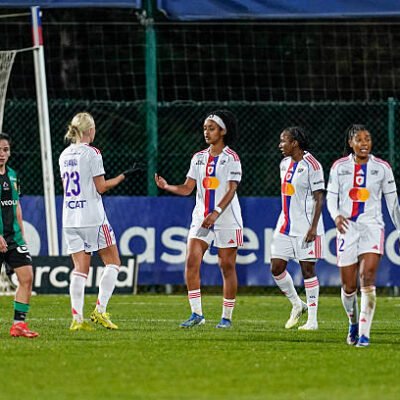

Manchester United WFC vs Club Atlético de Madrid — Match Intelligence Report
MATCH INTELLIGENCE SCORE: 5.2
—
## Act I: Early Phase — Red Devils Draw First Blood
From the opening whistle, Manchester United WFC set the tempo at Old Trafford, pressing with intensity and refusing to allow Club Atlético de Madrid the time and space to settle into their characteristically disciplined defensive shape. The early exchanges were competitive, but United’s attacking intent was evident, and the pressure they generated in the first quarter of an hour began to tell.
The breakthrough arrived in the 28th minute — a moment that would prove tactically significant beyond the goal itself. What made this early phase particularly compelling from an analytical standpoint was not merely the fact that United scored first, but what happened immediately afterward. Rather than sitting back and inviting pressure, Marc Skinner’s side continued to push forward, maintaining their attacking momentum and building a shot differential of +2 in the period following that opening goal.
This is a critical behavioural indicator. Teams that score first and then sustain or increase their shot output are demonstrating genuine tactical control, not simply riding fortune. United’s ability to maintain that attacking posture against an Atlético side renowned for their defensive organisation speaks to the quality of their early-phase performance. For Atlético, conceding before the half-hour mark and then failing to wrestle back shot dominance in the immediate aftermath represented a concerning start to their UEFA Women’s Champions League campaign.
[RAW METRIC: EARLY PHASE | Score: 8 | First Goal Min: 28 | Shot Differential: 2 | Result: Shot differential ≥ +2 after first goal]
—
## Act II: Game-Changing Moment — Substitutions Fail to Shift the Balance
Every manager’s instinct when a match is slipping away is to turn to the bench — to inject fresh legs, new ideas, or a tactical wrinkle that can disrupt the opposition’s rhythm. In this fixture, the substitution phase tells a sobering story, particularly for whichever side was chasing the game.
The data reveals that following the key substitution event tracked in this match, the shot change registered between 0 and +1. In plain terms, the tactical intervention produced virtually no measurable impact on the attacking output of the team making the change. This is a low-return outcome from a game-management perspective. A score of just 2 in this phase reflects how little the substitution altered the fundamental dynamics of the contest.
It is worth noting that the specific shot figures before and after the substitution were unavailable through standard tracking in this instance, meaning the analysis relies on fallback methodology. Nevertheless, the directional conclusion remains clear: the bench intervention did not generate the surge in attacking momentum that would typically signal a genuine shift in match control. For the coaching staff on the losing side of this tactical equation, the post-match review of substitution timing and personnel choices will demand serious attention.
[RAW METRIC: GAME-CHANGING MOMENT | Score: 2 | Result: Shot change between 0 and +1 after substitution]
—
## Act III: Post-60 Control — Stability Without Dominance
As the match entered its final third, the tactical picture that emerged was one of managed equilibrium rather than sustained pressure from either side. Between the 61st and 75th minute, both teams combined for 9 shots — a figure drawn from fallback tracking methodology — while possession in this window sat at 47.8%, indicating a near-even split of ball retention.
These numbers paint a portrait of a match that had settled into a controlled, somewhat cautious phase. Neither side was flooding forward with abandon, and neither was being pinned back in desperate defence. For Manchester United, holding their lead while maintaining possession close to parity suggests a degree of tactical maturity — managing the game rather than chasing it. For Atlético, the inability to generate a clear shot superiority in this window, despite needing a goal, underlines the difficulty they faced in breaking down United’s defensive structure.
A post-60 score of 5 reflects this balance accurately. The match was stable, but stability in this context favoured the team already ahead. Atlético needed chaos; they got equilibrium.
[RAW METRIC: POST-60 CONTROL | Score: 5 | Shots 61-75: 9 | Possession: 47.8% | Result: Shots stable after 60 minutes]
—
## Act IV: Decisive Phase — Silence in the Final Quarter
The 76th to 90th minute window is where matches are won and lost in the most dramatic fashion — or, as was the case here, where leads are quietly and efficiently protected. The data records 9 shots across this decisive phase, again sourced through fallback tracking, and crucially, zero late goals.
For Manchester United WFC, the absence of a late goal conceded is the most important number in this entire report. Holding firm in the final 15 minutes, when fatigue sets in and desperation can create dangerous moments, is a hallmark of a well-organised defensive unit. United’s backline absorbed whatever Atlético could muster and emerged intact.
For Atlético de Madrid, 9 shots in the final quarter without a single goal to show for it represents a deeply frustrating conclusion. The conversion failure in this window will be the defining wound of their evening — opportunities generated but not taken, and a deficit that ultimately proved insurmountable. The decisive phase score of 5 reflects a match that ended without late drama, but the scoreline’s finality was anything but neutral.
[RAW METRIC: DECISIVE PHASE | Score: 5 | Shots 76-90: 9 | Late Goals: 0 | Result: No late goals (76–90+)]
—
MATCH INTELLIGENCE SUMMARY
| Phase | Score | Result |
|---|---|---|
| Early Phase | 8 | Shot differential ≥ +2 after first goal |
| Game-Changing | 2 | Shot change between 0 and +1 after substitution |
| Post-60 | 5 | Shots stable after 60 minutes |
| Decisive Phase | 5 | No late goals (76–90+) |